





Experts share insights into cutting edge tech and AI
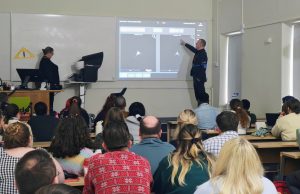
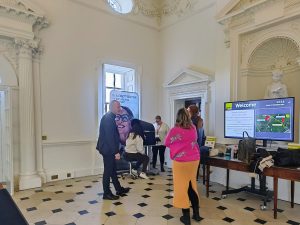
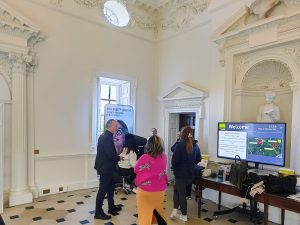
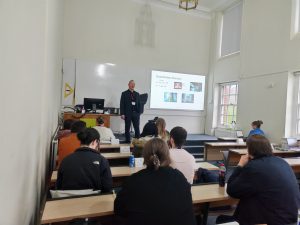
We recently welcomed a collaboration with lens manufacturer Rodenstock, with presentations from product and training manager Jason Halsey and former College student Sarah Selby.
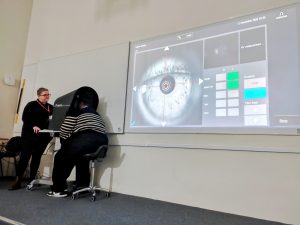
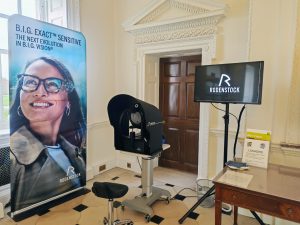
In a series of four visits they gave all year two students a demonstration of their DNEye scanner, which measures the eyes more precisely than ever before – at 7,000 different points.
The scanner takes biometric measurements, which help to create individualised lenses, giving patients incredibly sharp vision.
DNEye optimised lenses offer high-contrast vision, promising superb night vision, large fields of vision and natural visual experiences with excellent colour perception.
Students also gained insights into the company’s history of high-quality German engineering, dating back to 1877. In 1880 Rodenstock took out the first patent for spectacles with lenses and frames. They created the first lenses with anti-reflective coating in 1960 and introduced the DNEye scanner in 2012.
Learners said the visits were informative, insightful and engaging – a real highlight.
AI – combine it with your expertise
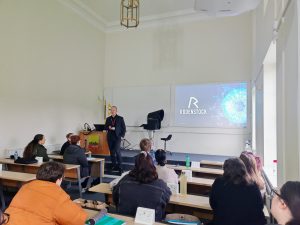
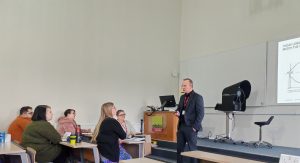
Jason Halsey visited us again this month to present an interactive CPD session for ABDO staff on making AI meaningful in practice.
Colleagues used their smartphones to explore platforms including Gemini, Copilot and Claude.
A top tip was to ask AI to explain the answer to a ten year old. This breaks down information, making it easier for the average patient to understand.
The session also highlighted the need to be aware of bias in your research and remain open-minded.
People taking part concluded AI can support – but not replace – clinical judgement. It’s most powerful when guided by your professional expertise.